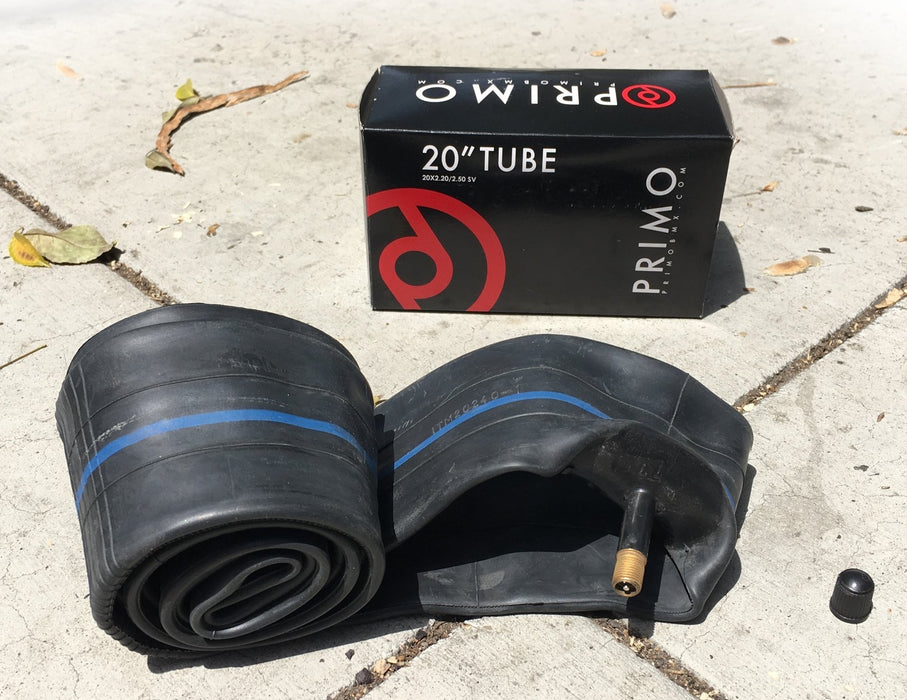
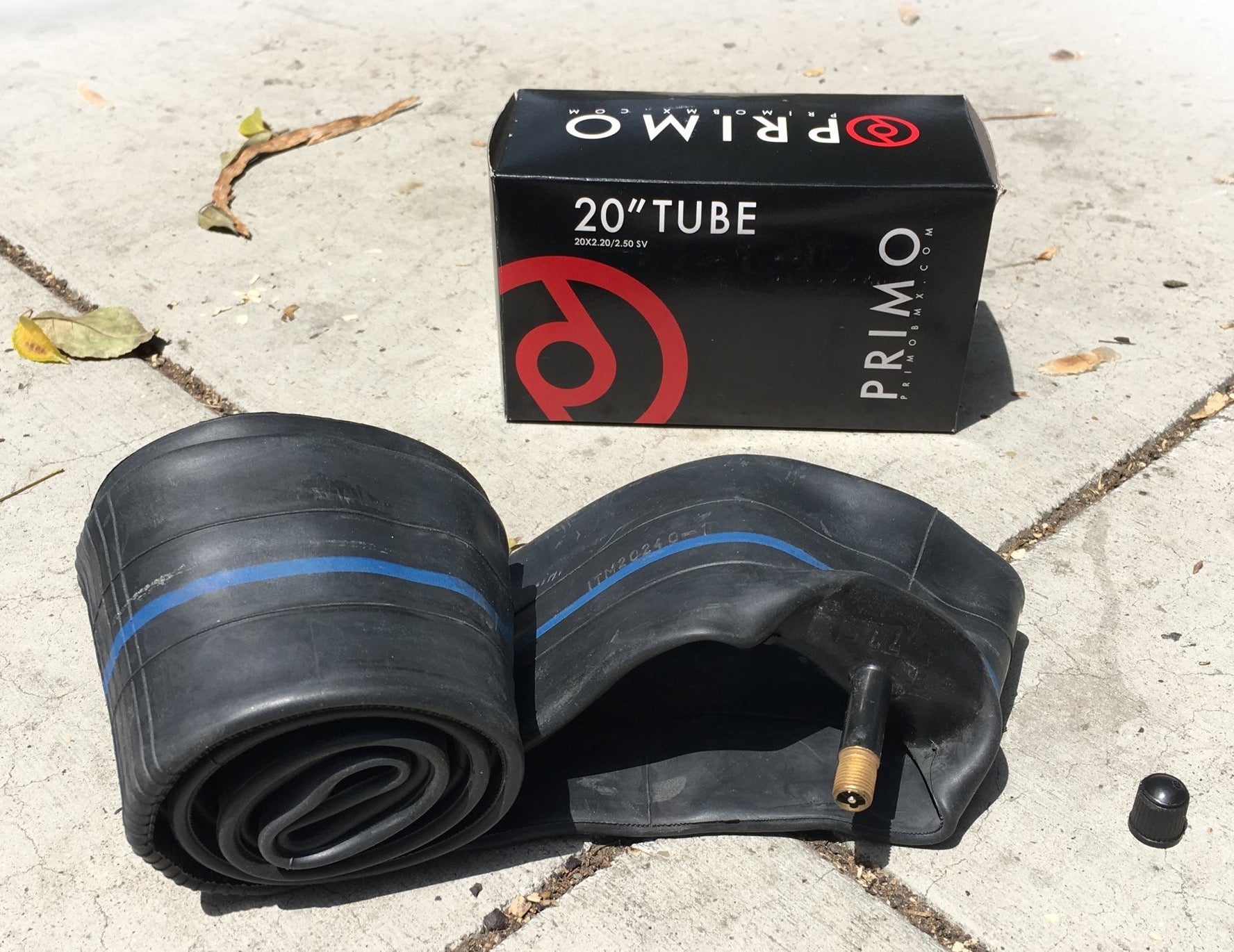
PRIMO TUBE
FREE SHIPPING FOR LIMITED TIME - NO CODE NEEDED
*SHIPS NEXT BUSINESS DAY
*SHIPS TO CA, NV, AZ IN 1-2 DAYS
*SHIPS ANYWHERE IN THE USA IN 2-5 DAYS
*365 DAY RETURN POLICY
*SUPER SECURE CHECK OUT
Stacked official word:
"The Primo 1.95 - 2.5" BMX inner tube is designed to not stretch and make your tube thinner and prone to flats. Manufactured out of high quality rubber this tube will last longer than the cheap tubes you buy at discount stores. This tube fits tire sizes 1.95' all the way up to 2.5" which is almost any 20" tire. This make this tube compatable with 90% of bmx bikes on the road. The valve stem is made out of brass to reduce corrosion and has a removable valve stem to prevent valve stem failure. If you want a high quality tube that will last longer, Buy a few of these tubes now."
Product Description
The Primo BMX Tube is built for BMX riders who need reliable air retention, dependable durability, and smooth performance during every ride. Designed for freestyle BMX riding, this BMX bicycle tube is made to handle street riding, skateparks, dirt jumps, and big BMX sessions while helping reduce flats and downtime.
Whether you are replacing a worn out BMX tube, building a fresh wheel setup, or preparing for your next BMX session, the Primo BMX Tube is designed to keep your bike rolling smoothly. Built with durable rubber construction and trusted Primo BMX quality, this freestyle BMX tube helps riders stay focused on tricks and progression instead of worrying about constant flats.
From daily street riding to long ride outs and skatepark sessions, a quality BMX tube is essential for maintaining proper tire pressure, smoother rides, and better wheel performance.
Features & Benefits
- Durable BMX tube construction
- Designed for freestyle BMX riding
- Helps maintain reliable tire pressure
- Great for street, park, dirt, and big BMX riding
- Flexible rubber design for easier installation
- Built for everyday BMX use and impacts
- Helps reduce interruptions caused by flats
- Trusted Primo BMX quality and reliability
Product Use
The Primo BMX Tube is designed for:
- Freestyle BMX bikes
- Street BMX riding
- Skatepark BMX sessions
- Dirt jump BMX riding
- Big BMX and wheelie bikes
- Daily BMX commuting and cruising
- BMX wheel maintenance and repairs
- Replacing worn or damaged BMX tubes
Why BMX Riders Use Primo BMX Tubes
BMX riders use quality BMX tubes because freestyle BMX riding puts heavy stress on tires and wheels. Hard landings, stair sets, rough streets, and repeated impacts can quickly damage low quality bicycle tubes.
The Primo BMX Tube helps riders:
- Maintain consistent tire pressure
- Reduce the risk of flats
- Improve overall ride reliability
- Stay riding longer during sessions
- Avoid frequent tube replacements
Riders trust Primo BMX because the brand is known for producing dependable freestyle BMX parts built for real riding conditions.
5 Problems Riders Run Into Using Other BMX Tubes
- Cheap tubes lose air pressure quickly
- Thin rubber causes frequent flats and punctures
- Weak valve stems tear or leak
- Low quality tubes pinch flat during hard impacts
- Poor construction makes installation difficult
5 Reasons the Primo BMX Tube Is Better
- Durable rubber construction improves reliability
- Designed specifically for freestyle BMX riding
- Better air retention for longer lasting pressure
- Built to handle street, park, and dirt riding
- Trusted Primo BMX quality and performance
Specs:
diameter: 20"
Width: 1.95", 2.0", 2.10", 2.125", 2.20", 2.25", 2.30", 2.35", 2.4", 2.45", 2.50"
valve: Shrader
valve cap: Plastic
Nothing ruins a BMX session faster than a flat tire. The Primo BMX Tube is built to help riders stay rolling with durable construction designed specifically for freestyle BMX abuse. Whether you ride street spots, skateparks, dirt jumps, or big BMX bikes, having a dependable BMX inner tube helps keep your bike ready for every session.
If you are tired of weak bicycle tubes losing pressure or getting flats during rides, upgrading to the Primo BMX Tube is a smart choice for riders who want reliability and performance.
Get your BMX bike dialed today with the Primo BMX Tube from Stacked BMX Shop and ride with more confidence every session.
Shipping: THIS ITEM ONLY SHIPS USPS, FEDEX or UPS GROUND. Free shipping is available on this item. More shipping info here.
We accept all major credit cards.
Q&A
Q: What size inner tube do I need for my bike?
A: You want to look on the side of your bicycle tire to determine the bike tube sizing you need for your bike. You will see a two-number size similar to 20 x 1.75" or 700C x 25c, which helps with accurate inner tube sizing. The first number is the diameter and the second number is the width. This applies to all bicycle tube types, whether you are buying from a local tubes bike shop or online retailers like Amazon bike tubes or this website.
Most bike tire tube types come in a size range. For example, a 20 x 1.50" – 1.95" tyre tube will fit a tire that is anywhere between 1.50" wide and 1.95" wide. If your tire is missing or too damaged to read the size, take it to your local bike shop and they can assist you in selecting a new bicycle inner tube sizing option.
Q: How do I know if an inner tube fits my tire?
A: To know if a bike inner tube sizing option fits your tire, read the answer above and make sure your tire width falls in-between the tube’s listed size range. Proper inner tube sizing ensures a smooth install and avoids damage to the tube wheel, tire, or rim.
Q: What is the difference between Presta and Schrader valves?
A: To tell the difference between an inner tube Presta valve and a Schrader inner tube, look for the valve that resembles a car tire air valve—that is a Schrader valve. The smaller, thinner metal valve is a Presta bike inner tube valve. A Presta valve requires a pump with a Presta head or a valve adapter. Choosing the correct valve type is important when purchasing a new bicycle inner tube, whether you are buying giant tubes, lightweight inner tubes, or standard options.
Q: Can I use a slightly different tube size than my tire size?
A: If you want to use a different size tyre tubing option in your bike tire, it is possible, but there are trade-offs. A tube that is narrower than your tire will stretch more when inflated, which can make it thinner and more prone to punctures. It may also fail to fill larger tires properly, creating a recessed or uneven tire profile.
If the tube is wider than your tire, installation becomes harder and you may pinch the tube during installation. This is especially common when using tools. In some cases, the tire may come off the bead because the tyre tube is trapped between the rim and tire.
You can use a larger tube in an emergency, such as using a spare inner tube for bike riding, but bulges or bead issues may occur. For best results, always choose the correct bike tube type to maintain safety, performance, and durability.
Q: How do I install a bicycle inner tube correctly?
A: Proper bike tube sizing and installation are key to a successful tire setup. Installing a bike spare tube correctly involves removing the old tire, inspecting the rim strip and tire, installing the tube evenly, and carefully seating the bead before inflation. Correct installation reduces the risk of pinched tubes, uneven wear, and premature failure—helping you get the most life out of your bike tires tubes & accessories and reducing overall bike tube cost over time.
Q: Why does my inner tube keep getting flats?
A: If your bicycle tire inner tube keeps getting flats it could be one reason or many. I will help you with the most common reasons a bike tube gets flat to the more complex ones. You have probably heard someone say "It wasn't installed correctly," "You ran over a nail," or "You inflated it too much." That’s often bad advice — here’s the correct info.
The number one thing to understand is that a bicycle tube is basically a balloon. You can get punctures from rose bush thorns, staples, nails, glass, or other sharp objects. Using a thicker tire, kevlar-reinforced bicycle tire, tire liners, tube sealant, or thorn-resistant bike tubes can help prevent this. Another reason is that your tire is worn out and punctures the bicycle inner tube easily. The inside of the tire could also be worn down, and the wires may rub against your bike tire tube, eventually creating a hole. Old tires can also dry-rot, becoming hard, cracking, and even failing under high pressure. A damaged bead may let the tire come off the rim, which can also ruin your bike tire inner tube. Replacing old tires with a new bicycle tire tube is the best solution.
Your cycle tube could also explode if it comes off the rim while inflating. This happens when the inner bike tire tube is stuck between the rim and tire. To prevent this, install the correct diameter and width bike tube, ensure it is inside the tire while inflating, inflate slowly, and use your hands to center the tire on the rim. If you still get flats, check your rim strip — a damaged rim strip can puncture your bicycle tube, so make sure it covers the rim width and is free from damage.
Q: What causes pinch flats in inner tubes?
A: If you keep getting pinch flats on your, this can help you prevent them. A pinch flat occurs when your bicycle inner tube contacts a corner, curb, rock, landing, or pothole. The tube gets pinched when your tire and bike tire tube fold under load and hit the rim at the edge. After removing and inflating the tube, you’ll often see 1–4 slits, sometimes called a “snake bite.”
To prevent pinch flats, use tires with higher air pressure, such as 65–100 PSI. Running higher pressure in your bicycle tire tube makes it harder for the bike inner tube to pinch and fail.
Q: How much air pressure should I put in my inner tube?
A: Proper bike tire tube pressure depends on rider weight, tire quality/PSI rating, and terrain. Street riders often run higher pressure (80–110 PSI) for speed and efficiency with high-quality bicycle tire tubes, while park and dirt riders may run lower pressure (50–80 PSI) for grip. Always follow the manufacturer’s recommended range printed on your bicycle tire inner tube or tire sidewall. For example, if your tire is rated 35–65 PSI, do not exceed that to avoid damaging your bike tube.
Q: How do I patch a bicycle inner tube?
A: If you don’t remember how to patch a bicycle tire tube, here’s the advanced method to patch a bike tube. First, locate where your old inner tube bike tyre got punctured. You can remove the wheel and lay it flat, valve stem at 12 o’clock. Release air, then use tire levers to remove the tire and access the bicycle tube.
Once the tube is out, inflate slightly and locate the puncture by listening for air leaks or using soapy water. Mark the hole, then scuff the area with sandpaper, clean it with solvent, apply a thin layer of glue, let the glue dry completely. Press the patch on firmly and cover the full surface. You don’t need to wait for drying — the patch adheres immediately. Reinstall the bike tire inner tube, inflate it, and ensure the tire is seated correctly. Now your cycle tube is ready to ride.
Q: Is it better to patch or replace an inner tube?
A: Deciding between patching or replacing your bicycle inner tube depends on your priorities. A tube is a balloon that inflates and keeps your tire functional. A patch kit acts as an emergency solution, like a spare inner tube for bike, to get you home safely. Patching saves money and takes longer than installing a new bike tube, but a new bicycle tire inner tube guarantees reliability and full performance. If you want 100% confidence in your equipment, replace your tube. If you want to save money, patching is acceptable — just know the risks.